Ideas for enjoying the real life of Seattle (that often cost little or nothing).

Thursday, May 03, 2007

Opening Day – Seattle Style

Everywhere else in God’s green America, Opening Day is synonymous with the start of baseball season. Not here. Not in Seattle. In Seattle, Opening Day, always the first Saturday in May, marks the official start of boating season. It is a long-standing tradition, dating back to 1913. The Seattle Yacht Club, which has hosted the event from its inception, has a great history of this big party on the water, which now includes crew races and huge parade of boats, yachts and ships of all kinds.

Above: Opening Day Parade passing through the hoglines of boats. Image from the Seattle Yacht Club website.

The races and parade pass through the “Montlake Cut”, a narrow canal that connects Lake Washington with Lake Union. Spectators-on-foot line both sides of the Cut, and spectators-on-boat create long hoglines that extend the canal up to ¼ mile or more into Lake Washington.

Left: Crew teams recovering at the end of a race. Image from the Husky Crew website.

Opening day is Seattle’s May Day, celebrating the return of warming weather, waxing days, and how we spend them… namely, on the water. Yachts, kayaks, dragon boats, row boats, canoes, sail boats, ski boats, fishing boats, skiffs, and inner tubes with beer holders will all be in attendance on Saturday to watch the races, tag along the end of the parade, and generally make merry.

Here is the schedule of events. Arrive early along the Cut with a picnic blanket and basket to claim a vantage point to cheer on the Husky crew teams.

Labels: , , , , ,

Saturday, April 14, 2007

Weekenders: Orcas Island - A Center of the Cascadia Universe

This post is one of an intermittent series on weekend getaway destinations that are 1/2 day or less drive from Seattle. There are so many options: seashore, islands, mountains, countryside, neighboring cities and towns. We will take a look at some of the best examples of each.

About 100 miles north of Seattle, in the most northwest corner of the contiguous US lies a group of craggy, evergreen, windswept islands called the San Juans. They are part of a larger archipelago that reaches north along the BC coast.

Above: A view of the hamlet of Olga on Orcas Island

The San Juan Islands include far over 100 islands. Many are tiny holding, at times, a single tree. Some are completely owned by a single person. Some are entirely state parks, complete with docks, mooring bouys, and basic camping facilities such as water spigots, fire rings, and outhouses. Only four of these islands have sizeable populations: San Juan, Lopez, Shaw and Orcas. These are also the only four islands in San Juan County that are accessible by the Washington State Ferries. As the WSFs are by far the most affordable way to travel to the islands, these four islands have become even more populated and have developed into destinations for travelers.

Left: Riding the Washington State Ferry

Each of the four major islands has its own individual charm and unique landmarks and assets. Each has accommodations and parks and historic sights. Orcas, although not the largest or most populated (San Juan Island is), seems to be the most popular with visitors. It may have to do with the charm of East Sound, the only town on the island. It could be the marketing muscle behind historic Rosario Resort. Or it might be that Orcas has, by far, the highest point in the county, Mount Constitution in Moran State Park, from the top of which on a clear day one can see as far north as Canada and behold breathtaking views of Mt. Baker, the Olympic Peninsula, and nearer bird’s eye views of the islands themselves.

Right: A view southwest toward Lopez Island after sunset from Buck Bay

This mild, sunny region (due to a “rain shadow” created by the Olympic Mountains, the San Juans get about ½ the rainfall of Seattle), is rich in wildlife from eagles, loons and herons, to whales, seals, otters, and deer. Orcas Island, approximately 60 square miles in size and with a year around population of about 5000, is also rich in landscape, arts, and activities. It has such a vast spectrum of things to do and see it’s hard to know where to start in describing Orcas and highlighting the must-see sights. Nonetheless, here is an intrepid attempt:

How To Get There

To drive to Orcas (recommended due to its size and limited rental car service), you must plan ahead, particularly in the summertime. There are a limited number of ferries to Orcas each day. Check the WSF website for the schedule. You cannot reserve a space, and boats fill up in the summertime, so depending on the day and time (Thursdays and Fridays are most popular), you should arrive at the landing between 1 and 3 hours ahead of your intended sailing time.

Left: 90 minutes before the ferry departs on a Friday in April

Directions: From Seattle, drive North on I-5 about 65 miles to exit 230.
At exit 230 head west on highway 20 approximately 15 miles to Anacortes.
Head north on Commercial Ave a little over a mile, then follow signs west to the Washington State Ferry Landing.

Flights are also available through San Juan Airlines and Kenmore Air.

Activities

Scenic Drive Destinations

West Sound is a sweet little crossroads on, you guessed it, the western half of the island. There is a small inn and café with a view south to the water. Getting there, you drive through farmland reminiscent of Ireland with its sheep and grassy expanses.
Deer Harbor is a step beyond West Sound, and offers views of a snug little harbor after a trek along a rocky shoreline.
Mt. Constitution in Moran State Park on the east side of the island is a long, windy drive up and up through fir forests breaking open to ever-more breath taking views as you climb.

Above: A summer solstice sunrise from the top of Mt. Constitution, looking across Lummi Island toward Mt. Baker. Photo Credit: Cascadia Dad.


Olga, a couple miles south of Moran Park, is small, quaint and intimate. The Orcas Artworks is there, with Café Olga, and a drive down to the road’s end offers a peek into hamlet life on the island. A dock, gazebo, potter’s workshop, community hall and park, and a post office being the highlights

Above: The public dock in Olga

Hiking

Moran State Park offers several hiking trails of varying length and difficulty, two beautiful and COLD lakes which are perfect for trout fishing (in season) and non-motorized boating (paddle and row boats can be rented in the summer), and comfortable camping facilities.

Left: Cascadia Falls in Moran State Park

Right: Hiking Mt. Pickett in Moran State Park

Turtleback Mountain, recently saved from the threat of development through the efforts of the San Juan Preservation Trust is another hiking gem of the island, only recently opened to the public for hiking.
Obstruction Pass Park is a locals’ favorite. A short, flat hike through fir and madrona forest and dense salal leads to a beautiful rocky beach. A few campsites are available.
Madrona Point is a small park and sacred Lummi burial site just a few short blocks from “downtown” Eastsound. It offers an easy, short hike to views south out of the Sound. Grab a picnic lunch at Roses Bakery or Island Market and head over.

The Arts
The Orcas Center,hosts local and visiting performances of theater and music. If you see a local group on the calendar, don’t shy away… Orcas is a magnet for artists of all kinds and the talent shows up on stage.
Orcas Grange hosts the occasional dance, which is supposed to be truly a wonderful time.
Orcas Artworks shows and sells fine art and craft only from full-time residents of the island. Membership in the co-op is competitive and prospective members’ work is juried.
Left: A self-serve flower stand across the street from the Artworks. Photo Credit: Cascadia Dad


Howe Art is a magical, kinetic sculpture garden and gallery.
Crow Valley Pottery is both beautiful and historic.
Lamiel Museum is a continuously evolving collection of local art in a private home.
Other Ideas

History
Orcas History Museum is a sweet little place in Eastsound, comprised of several historic cabins from the island which have been moved and attached. Learn about the Native American tribes and the European pioneers as well as later history through the depression and world wars.
Rosario Resort was originally the private home of Robert Moran, a wealthy Seattle shipbuilder. It was built at the beginning of the 20th century and is a lovely place to tour. Robert Moran was also a great patron of the island, developing and donating the land that would become Moran State Park to Washington State.

Shopping in Eastsound
Here are a few Cascadia Girl favorites:
Farmer’s Market
Tres Fabu
Olga’s
Darvill’s Bookstore

So Much More
• Kayaking, Whale Watching, Fishing, Spas, Sailing are just a few of the other activities on Orcas. Here is a good resource for finding outfitters, charters, rental companies, etc: thesanjuans.com

Where To Stay

Inns and B&Bs
Turtleback Farm Inn
Kangaroo House
Buck Bay Farm
Inn at Ship Bay
Outlook Inn
Deer Harbor Inn
Kingfish Inn

There are far more options than the ones listed here, but it is a start. Here is a resource for more ideas: gonorthwest.com

Camping and Other
Moran State Park Note: Try to reserve a camping spot NOT along the main road.
Vacation Rentals Note: These are for longer stays. Usual minimum rental is 1 week.
Doe Bay Resort Note: Very crunchy-granola funky.
Rosario Resort Note: Very popular due to strong advertising and long history. Some folks love it. Not a Cascadia Girl favorite, however the spa there is said to be very nice.

Dining
As with the accommodation list, the array of options for dining is far wider than the list here. However, all those listed below have the “Cascadia Girl Seal of Approval.”

Casual, less expensive, options
Café Olga
Rose’s Bakery
The Kitchen
Portofino Pizzeria
Bilbo’s Festiva
Westsound Café

Fine Dining
Inn at Ship Bay Note: Their scallops are heavenly.
Olga’s
Christina’s
Deer Harbor Inn

Other Information Resources
The list above does not begin to do justice to highlighting all the attractions of Orcas… there is just so much. Therefore, here are a few more resources for research and dreaming:
Orcas Island Chamber of Commerce
Guide to the San Juans

Labels: , , , , , , , , , ,

Monday, March 19, 2007

The Arboretum

Given the exquisite landscaping and loving upkeep of the Washington Park Arboretum, there is a valid argument that any season is the season to walk this zenful 230 acres. However, springtime and fall are the highlights with blossoms and leaves, respectively, providing a parade of color and texture.

Spring bloom time has recently begun, with Japanese cherries, magnolias, rhododendrons, camillias, and forsythia showing off among the new, bright green leaves of other trees. Professional and hobbyist photographers alike are flocking to the park these days, along with the usual dog walkers, runners, couples-in-love, and troupes of school children on nature walks.

Highlights include the Japanese Garden and the Foster and Marsh Islands trail at the north end of the park, featuring breathtaking views of Lake Washington, University of Washington, and often crew boats, kayakers, canoers, and all other sorts of boaters. This area is also a birdwatcher’s paradise, filled with herons, eagles, red-winged blackbirds and all forms of ducks and other marshland birds. This trail map will be helpful on your walks.

The Arboretum is open from dawn to dusk every day of the year. There is no admission fee. The Graham Visitors’ Center is open from 10am to 4pm every day of the week (closed on certain holidays) and includes a gift shop, restrooms, and a meeting space. The Japanese Garden is open Tuesday - Saturday, except for June, July and August when it is open every day of the week. The admission fee is $5.00. This map will help you find your way there.

Labels: , , ,

Monday, February 05, 2007

Weekenders: Mount Hood & Timberline Lodge

This post is part of an intermittent series on weekend getaway destinations that are 1/2 day or less drive from Seattle. There are so many options: seashore, islands, mountains, countryside, neighboring cities and towns. We will take a look at some of the best examples of each.

About an hour east of Portland, Oregon sits Mount Hood, the state's highest mountain. It is to Oregon what Mount Rainier is to Washington: a point of orientation, a comforting icon of home, an outdoor recreationalist's haven. The mountain is almost entirely National Forest land, with much of it designated as wilderness. Climbing, hiking, and skiing are all year-around activities there.

Mount Hood also has a treasure trove of history in Timberline Lodge, a gorgeous hand-built lodge constructed at the height of the 1930s depression by the WPA (Works Progress Administration). Forest workers and WPA artists worked long hours to complete the entire project in less than two years, from early 1936 to late 1937, and was dedicated by President Roosevelt.

Above: Outside of Timberline Lodge. Look familiar? The lodge was used for the outside shots in "The Shining."

The lodge, which operates to this day as an inn, was dedicated as a national historic landmark in 1978. It is also a "living" piece of American craft from woodcarving to wrought iron works, from weaving, applique, and painting to mosaic, carved linoleum, and stained glass.

Left: A pelican banister post leads to a stairwell paneled with a carved wood mural and lit by a hand wrought iron lamp.

Left: A mosaic illustration of Mt Hood wildlife is the back splash for the brass water fountain.

Since the mid 1970's the lodge has been maintained and restored by a dedicated group of volunteer artisans, called the Friends of Timberline, who work diligently to preserve, repair and when necessary replace craftwork in the same manner the original pieces were created.
Left: Note the loom next to the ranger's desk. Visitors can often watch artists recreating fabrics to replace worn out draperies and furniture cushions.


Many of the rooms in Timberline are dedicated to the lodge's history, from its creation to its famous visitors to the evolution of Mt. Hood as a destination for outdoor recreation.


Above: Pictures from early-day visitors.
Left: The story of how local Campfire Girls designed the insignia for the lodge. Campfire has long been an icon of Northwest living.


The video clip below provides a glimpse of the Lodge's great room.


How To Get There

From Seattle, take I-5 south to I-205. Continue south on I-205 to I-84 east. Heading east on I-84, take exit 16 and follow signs to US-26. Continue on US-26 to Timberline Highway, which takes you right to the lodge.

Where To Stay

You would be cheating yourself if you stayed anywhere other thanTimberline, especially in the wintertime. Given the beauty and historic significance of the lodge, as well as the ski lifts being right out the door, the prices are very reasonable ($90-$255). However, if you can't get reservations or prefer to camp (summer only) the local chamber of commerce can point you to other places to stay.

Where to Eat

Again, really, the place to be when you visit Timberline is Timberline. The lodge has a fabulous fine-dining room in the Cascade Dining Room. The Ram's Head Bar is great for lunch with a view of the skiers. The Blue Ox Bar is another option.

Down the mountain in Government Camp, the Huckleberry Inn is the place for breakfast. The huckleberry pancakes are a must. Further on, in Welches, is a great little Mexican joint called El Burro Loco.

Above: The view to the slopes from the Ram's Head Bar.

Where to Play

For the snow sports:
Timberline, of course, has a very nice ski area that takes you far up the mountain onto its famous glaciers. The largest (and nicest) area is a bit further east at Mount Hood Meadows
Ski Bowl is the least expensive... for a reason.
Snow Bunny is a long-standing inner tubing site for snow-loving non-skier.

For summer activities, the Mount Hood Information Center has lots of great info and links on camping, hiking, climbing, fishing, festivals and more.

Labels: , , , , , ,

Saturday, January 27, 2007

When in Rome... or Seattle: Eagle Watching on the Skagit

This post is one in an intermittent series on places and activities favored by Seattle locals when they want to “sightsee” their own backyard. In every city there are activities and landmarks promoted to tourists that locals avoid, because of the crowds, the cost, the “cheesy” factor, and/or having done it every time family visits from out of town. In Seattle, these include the Space Needle, the Underground Tour of Pioneer Square, and riding “The Duck,” among others. Ever wonder how a New Yorker sightsees in Manhattan or a Parisian in Paris? Here is a look at what Seattlites do when they want play tourist.

One of the most raw yet beautiful events of nature in Cascadia is occurring right now on the upper Skagit River, approximately 2 hours north and east of Seattle. A major salmon spawn is in full swing, attracting hundreds of bald eagles. This year, the Nature Conservancy counted over 500 balds along an 11.5 mile stretch of the river. This is a record for the Skagit and is the largest gathering of the raptors in the country.

Cascadians, in turn, flock to the area to take in the amazing sights of both the salmon run and the convention of eagles and other large birds that converge to feast. Each year thousands of visitors arrive with binoculars, cameras, boots, and raincoats to watch the spectacle of this cycle of life.

Left: Bald eagles dining on spawning salmon in the upper Skagit River. Photo from the Skagit River Bald Eagle Awareness Team, taken by Bradley Husick.

The upper Skagit is an intensely beautiful area with dense forest laced with moss and carpeted in ferns, salal, and other evergreen undergrowth. The small towns of Concrete, Rockport and Marblemount which line the Skagit River host the annual Upper Skagit Bald Eagle Festival” which happens next weekend, February 3rd and 4th. Events range from the “biscuits-and-gravy” breakfast feed at the local senior center to scientific presentations, guided tours, and entertainment in the form of storytelling and musical concerts. The locals put their heart and soul into the festival. They are very proud to be stewards of this part of the region and to be helping to preserve this annual rite of nature.

There are many ways to see the eagles, from guided hikes to float trips. However, you don’t have to be an outdoorsman to catch the action. Highway 20 parallels the river in many places and it is common to see folks pulled over on the shoulder of the road, taking pictures of the feasting birds from inside their cars.

Here is a link to a couple video clips of eagles feeding on salmon in the Skagit.

How to Get There:

Head north on I-5 one hour to Sedro Wooley, then east on Highway 20.

Where to Eat (and stay):

There are many little local cafes and restaurants in the area. Most are of similar casual, family-style quality. For a little piece of history and local color, stop in at the Buffalo Run Inn in Marblemount. This restaurant/hotel used to be the area’s brothel (many, many moons ago). Last time I ate there, the waitress told us about shooting a bear in her back yard who had started rummaging in the trash cans. Generally, shooting bear is illegal except for when one becomes a “public nuisance and danger”. “And,” she told us, “bear’s good eatin.”

An eagle-watching trip can easily be a one day outing. However, if you want to make a weekender of it, there are many kitschy, little places to stay along the way.

Delving a little Deeper:

If you do make a weekend of it and want take a break from the Festival, check to see if any of the other hiking trails in the area are open and hikeable.

Labels: , , , , ,

Monday, January 22, 2007

Weekenders: The Methow Valley

This is the first in an intermittent series on weekend getaway destinations that are 1/2 day or less drive from Seattle. There are so many options: seashore, islands, mountains, countryside, neighboring cities and towns. We will take a look at some of the best examples of each.

On the eastern border of Cascadia, where Highway 20 touches down from a flight through the North Cascades, there is a magical place called the Methow Valley. This region, half wilderness and half cowboy country, is an outdoor recreationalist’s dream, both in the summer and the winter. Although it is a “working” valley of farms and ranches, it is also a mecca for Seattlites craving real seasons; the heat of summer and the snow of winter.

This time of year, many of the ranchers and farmers open their fields for cross-country skiers. There is over 100 miles of groomed cross-country trail in the valley. Track, skate, and back country skiers flock to the valley from December to early March. There are ample snowshoeing trails as well, and each year there are more trails (ski and snowshoe) that are open to dogs!!

Above: The dog-friendly, "Big Valley" trail just east of Mazama

In the summer, many of the ski trails continue to be publicly accessible for walking and mountain biking. There are also many great hiking trails in the national forest. Climbers scour Goat Wall. There is hiking and horseback riding. There are music festivals and rodeos.

How To Get There

Getting to the Valley is the only challenge. From Seattle in the wintertime, the drive is at least five hours. Travelers must take either Steven’s Pass (Highway 2) or Snoqualmie Pass (I-90) to Blewett Pass (Highway 97). The North Cascades Highway (Highway 20) is closed in the winter due to heavy snow and avalanche danger. However, the 20 is the undeniable route to take in the summer. Each journey is beautiful, but the 20 is unsurpassed.

Where To Stay

In the wintertime, the preferred destinations are the communities closest to the mountains. Early Winters, Mazama and Winthrop are the areas that will have the best snow. There are many affordable, little cabin motels in the Valley, including Winthrop. My favorite Winthrop accommodation, however, is the Duck Brand Hotel and Cantina. It is a comfortable spot right in kitschy, "old western", downtown Winthrop with very reasonable prices. For a more all-inclusive and swankier stay, try the wonderful Mazama Country Inn. The hearty yet gourmet meals are served family-style in the winter, and they set up a brown bag buffet so you can pack a trail lunch for your ski day. Many folks like the Sun Mountain Lodge, a classic hotel/resort on the south rise of the valley.

Grub

There is a wide selection of great, inexpensive food in the Valley. Here's just a small selection:

Mazama Country Store in Mazama
Topo Cafe (Asian) in Winthrop
Duck Brand Cantina (Mexican) in Winthrop
The Twisp River Pub in Twisp
Tappi (Italian) in Twisp
The Cinnamon Twisp Bakery in Twisp
The Blackbird Cafe in Twisp

All dining in the Valley is casual, or at least casual optional. Never worry about walking in in jeans and boots!

Gearing Up

Winthrop Mountain Sports is the favorite outdoor clothing and equipment shop in the valley.

The Trails End Bookstore in Winthrop is your gear shop for the more snowy days.

Labels: , , , , , ,

Friday, January 12, 2007

When in Rome…or Seattle: Mt. Si

This is the first in an intermittent series on places and activities favored by Seattle locals when they want to “sightsee” their own backyard. In every city there are activities and landmarks promoted to tourists that locals avoid, because of the crowds, the cost, the “cheesy” factor, and/or having done it every time family visits from out of town. In Seattle, these include the Space Needle, the Underground Tour of Pioneer Square, and riding “The Duck,” among others. Ever wonder how a New Yorker sightsees in Manhattan or a Parisian in Paris? Here is a look at what Seattlites do when they want play tourist.

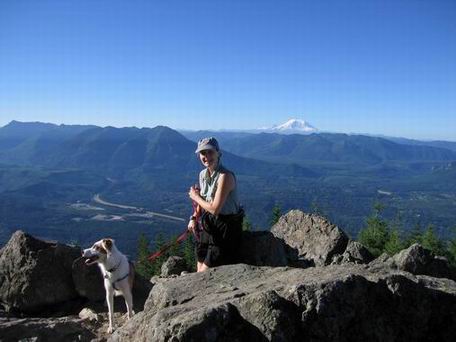
When Seattlites want to “get outside,” test their meddle, and take in some awe-inspiring scenery without hauling out the backpack, they head to Mt. Si. Located in the beginning of the Cascade foothills, about ½ hour east of Seattle in North Bend, this day hike is a pilgrimage for many locals; some annually, some weekly, some daily. Many hike it in the late spring to test their readiness for other mountain excursions. It offers lovely, forest scenery and stunning views of the Cascades and the city from the top.

An eight mile hike, round trip, you climb 3700 feet to a craggy outcropping with views to the west (Seattle) and south (Mt. Rainier). If you investigate a bit, you will also find some views to the north (Mt Baker).

Left: The view South

While on the trail, you may need to step aside for one of the Mt Si runners. These are folks training for big races and use Mt. Si as their Stairmaster. If you see water bottles tucked next to the trail, leave them. They are left by the runners while heading up to grab and use while coming down.


Left: A close up of Mt. Rainier

You will also likely run into many big, friendly dogs. Dogs are welcome on Mt. Si and, although officially they are supposed to be on leash, most are so friendly and well behaved that their owners let them loose to blaze the trail.

Tips:

Go when it’s been dry for a few days (yes, that happens). Mt. Si is a steep hike in places, and can be treacherous when muddy.

Above: Looking west toward Seattle

Wear sturdy boots. Although the trail is very well maintained, it is an eight-mile hike with a healthy incline. Also, the last stretch to the top is a rock scramble.

Go early in the morning and/or on a weekday. This is a VERY popular hike. If you start after 8am on a sunny weekend day, you could find yourself in a glory train of fellow hikers. Also, if it is going to be warm, you don’t want to be hiking up in the heat of the day.

Don’t forget food and water! Make sure to bring a knapsack with the basics, including lots of water, a hearty sandwich, and something to snack on, on the way up.

Bring your camera. The views really are breathtaking, and fellow hikers will be happy to take a “victory shot” of you at the top.

Directions:

From Seattle, drive east on I-90 to Exit 32. Turn left on 468th Avenue and drive to North Bend Way. Turn left and drive to Mount Si Road. Turn right and drive 4 miles to the trailhead on the left.

Links:

http://www.mountsi.com/
http://en.wikipedia.org/wiki/Mount_Si
http://www.peakbagger.com/peak.aspx?pid=2087

Labels: , , ,

Tuesday, November 21, 2006

Nature in the Midst of the City

Parks in Seattle were planned for early on. The Olmsted brothers conceived of a "string of pearls", a cruising boulevard studded with parks. This plan was largely accomplished and Seattle now has long-established parks throughout the city. Given the prevalence of water and hills, stunning views and water access are common.

The Arboretum is a large city park that lies just southeast of the University in the Madison Valley neighborhood. It has a great trail that cuts across two islands facing the university campus.

Kerry Park on Queen Anne hill has one of THE best views of the city (skip the Space Needle).

Seward Park is a lovely park on Lake Washington that encompasses an entire peninsula into the lake. There is a beautiful walk around it's perimeter as well as an old growth forest trail in the interior.

Volunteer Park, on Capitol hill sports not only a fabulous city view (particularly from the water tower), but also the Asian Art Museum and a conservatory.

Lincoln Park is in West Seattle and has a great walk along the waterfront of Puget Sound.

Discovery Park, in the Magnolia neighborhood, is also a large park and has some amazing views of Puget Sound and the Olympic Mountains.

Labels: , , , , , , , ,


Web cascadiasong.blogspot.com
seattlesong.blogspot.com
Travel Blogs - Blog Top Sites
A Note Regarding Links: A few of the links from this site are to sites that sell products or services. Please note that, although I may receive a small compensation for the link, I only link to these sights when I genuinely like/recommend them. Also know that these third parties may serve content and/or advertisements and collect information directly from visitors and may place or recognize cookies on visitors' browsers.